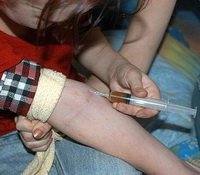
Modern life is such that you are almost sure that your child will sooner or later come into contact with drugs. Statistics leaves no illusions. And, it would seem, nothing can be done ... stop! You can protect your child from this once and for all! Only do it from the very tender childhood. The most important is the formation of the child's independence, his respect for himself and his family and high resistance to stress. It is also important to teach the child as soon as possible a positive and safe way of meeting their needs. So, we begin our parental meeting: drugs and children - the topic of discussion for today.
The results of the study on prevalence of substance use (alcohol, drugs) in secondary schools are alarming. Widespread, regular intoxication among young people is becoming the norm. For them, this is some kind of adventure, it's fun and interesting to experiment with. They do not feel fear for their lives - and this is the horror of the situation.
There are many prevention programs in schools aimed at providing students with the deep knowledge and skills necessary to resist peer pressure or situation. However, these programs have limited opportunities to develop appropriate approaches. The main place where the most important part of preventive work should be done is the family. And then, whether the child chooses a life for himself without drugs, largely determines his upbringing from an early age as a self-sufficient person.
Safe satisfaction of the emotional experience of the child
Andrew entered the company of drug addicts accidentally. He met with a friend at a concert in school. He was with such and such strangers. Teenagers began to offer him "to relax." First, Andrew refused - he was against drugs and knew what their use leads to. Over time, he began to understand that in his life nothing fascinates. He was sick of everything-school, computer games, constant quarrels with his parents. And his new "friends" did not leave him, they convinced him that they would always support that he was not alone. And he decided to try. Over time, drugs filled the void and boredom that he felt for a while. And then the worst began ...
Remember:
Your child should feel part of the group - his family. Never let him be left alone with his problems. In his early childhood, his problems seem to us so small, we brush them aside, do not attach importance. And the child grows with the thought that nobody cares about him. His problems are of no interest to anyone.
It is also necessary to "dunk" the child in various situations to give him to experience something unique and unusual. Roughly speaking, a child should not get bored of life. The best occupation for a child is sports, art classes, travel. Your child should get experience in experiencing strong emotions. Let him participate in sports competitions, performances or go to summer in the camp, for example. The lack of emotions and feelings of wonder is what pushes children to use drugs.
Support the interests of your child and give them self-confidence. He is still actively looking for himself in the group and striving to get strong emotions - help him make the right choice.
Formation of well-being and high self-esteem of the child
Diana was always quiet and "hammered" by the girl. She was afraid, embarrassed, often withdrew into herself. After the first experience with drugs, she suddenly became noticeable to everyone, relaxed, bold. Diana remembered how confident she was and happy then. Drugs quickly became important and necessary for her well-being and a sense of her strength.
Remember:
Your child should have a sense of self-worth. If you can not instill this into a child, it will be easier for him to achieve confidence through drugs. They make him a leader at least for a while. Only this way he can feel really good and relaxed. The confidence in their abilities, which the child will miss every day, can easily and easily give him drugs.
Teach the child to attach importance to their daily successes and victories. Praise him even for small achievements, appreciate not the result, but the efforts spent. Give the child so much freedom and autonomy, for how much he is able to take responsibility. Enter the trust of the child, know everything that he does, thinks and feels. You must also become a listener, not just a person who "gives something".
Development of resistance to stress
Stas was never a good student. Into the house, parents were constantly angry with him for failing. He was afraid of everything-he was afraid of the school, the parents' reactions to the assessments, the ridicule of classmates. He was afraid, so much that he began to flee. He fled from school to isolate himself from his parents, peers. When he first tried drugs, he suddenly felt strong and believed in a better future. He believed that the decision would come by itself. Stas was finding it increasingly difficult to dispense with drugs and fewer efforts remained for real action. The drugs replaced the reality, in which there was nothing to fear ...
Remember:
Your child should receive experience of behavior in various complex and stressful situations. Solving the problem will require perseverance and perseverance. If you do not let the child know difficulties, he will never learn to cope with them. He will rather resort to drugs or drugs that will prevent pain and feelings of helplessness.
In difficult situations, support your child, but do not solve the problem for him. Do not keep it too close to yourself and do not protect from all adversity. React calmly when your baby cries. Thus, he learns from early childhood that you can not immediately get everything that some things have to fight, that not always everything is done fairly.
The statement, which was the result of our improvised parental meeting - drugs and children should not go through life together. And it is in our hands to make sure that they never touch life. Parents should, if possible, lead the child through the whole process of education to prepare it for various life situations. Including for making decisions about the use of drugs. However, the decision itself will always remain with the child.