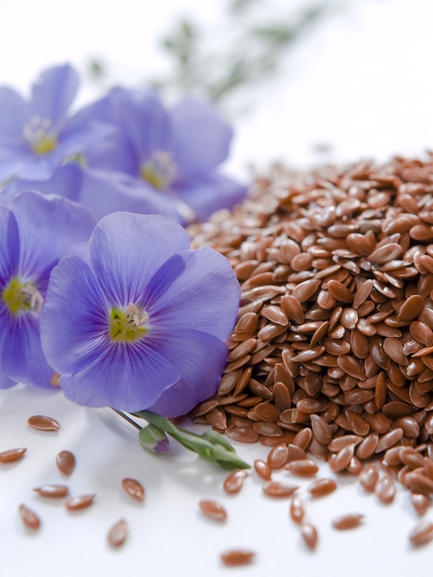
The article tells about useful properties of flax oil and its application in folk and official medicine, as well as in cosmetology.
Flax in our imagination appears as an unpretentious plant with small soft blue flowers, or as a kind of fabric that has excellent properties for any weather: in the cold season - it heats, in hot weather - brings coolness.
However, flax is also a plant from whose seeds a very useful oil is made. Healing and therapeutic linseed oil, its useful properties and methods of application were known in ancient times.
Hypocrates also used it to successfully treat various gastrointestinal tracts, as well as to heal wounds, cuts, burns.
The Egyptians used oil from flax seeds in cosmetology: they lubricated their hair and skin to strengthen and maintain beauty and youth. And also added to almost all ointments and creams.
In Byelorussia and Ukraine, for a long time, flax oil has been an inalienable and most important food product.
The production of flaxseed oil is more expensive than that of sunflower, so with the advent of sunflower in agriculture, the cultivation of flax has come to the fore.
At present, linseed oil has again become popular as a healthy food product. For example, in the USA it is actively used in cooking for salad dressing. And flax seeds are given to children as a biologically active additive.
Useful properties of linseed oil
- Flax seed oil is a source of unsaturated fatty acids - linoleic and alpha-linoleic acid, which are vital and necessary for growth and proper metabolism throughout life. Derivatives of these acids are found in the human brain, in breastmilk. These acids are responsible for the structure in the cells of the membrane layer.
- This is an excellent tool for the prevention of atherosclerosis. Lowering the level of cholesterol in the blood, oil prevents the formation of blood clots in the vessels of the circulatory system. To that, the risk of developing such heart diseases as myocardial infarction and coronary heart disease decreases. It is proved that the use of oil within one month reduces the risk of all cardiovascular diseases by 8-10%.
- Flaxseed oil has no contraindications, it is impossible to poison them or get an overdose. When ingested in excess in the stomach, the oil is quickly removed.
- Oil from flax seeds is one of the folk remedies for the prevention of oncological diseases. Normalizing all metabolic and metabolic processes in the body, oil prevents the appearance of cancer cells. The normalization of all processes occurs due to the content in the oil of substances such as lignan. Lignans have antibacterial and antifungal properties, and are also able to slow the growth of tumor cells and prevent the proliferation of cancer cells. Flaxseed oil is one of the most important means of preventing the development of breast cancer in women. Lingans are able to suppress the excessive amount of the hormone estrogen, which is the main cause of breast cancer.
- With daily intake of flaxseed oil for patients with type 2 diabetes mellitus, a healing effect on the entire body was noted, as well as a decrease in the blood sugar level. Flaxseed oil is used for such diseases caused by inflammatory processes such as sclerosis, rheumatism, arthritis, eczema, psoriasis, asthma, etc.
Application of linseed oil
- Doctors recommend the use of at least 40-50 grams of oil per day for the healing and healing effect.
- To lower blood pressure, linseed oil should always be present in the daily diet of hypertensives.
- Flax seed oil is a mild laxative. The oil has slightly irritating properties for the stomach and intestines, which improves peristalsis, but does not lead to diarrhea and dehydration of the body.
- Oil is actively used for the treatment of hemorrhoids, nephrolithiasis, dysentery, cholelithiasis, atherosclerosis, spastic colitis, obesity.
- In folk medicine, as well as official flax is used in the treatment of skin diseases, ulcers, burns, eczema, allergic rashes, inflammations on the skin, infected wounds, pyoderma and furunculosis. Such a beneficial effect of flax oil on the skin is due to the large number of vitamins A, linolenic and linoleic acids present in its composition.
- On an industrial scale, a lot of creams, ointments, emulsions, flours, linseed soaps are produced.
Application of oil in cosmetology
- Oil is used for tightening, strengthening and refreshing the skin at home. Can be applied directly to the skin or used as an ingredient for the preparation of creams and masks. Oil is applied to ulcers, wounds, eczema on the skin, acne and boils.
- Flaxseed oil helps in the fight against cellulite. Oil mixed with coffee grounds or ground coffee grains effectively acts on the skin, tightens it, eliminating cellulite.
- To soften the skin of the legs or feet, the following mask is applied. In equal proportions, mix the yolk, honey and butter, carefully move and apply to the skin. Cover with polyethylene and a towel. After 30-40 minutes rinse with warm water, without using soap, wipe dry. For heels, this mask is recommended to be applied overnight.
Oil from flax seeds can not be subjected to heating, because it is precipitated and loses its useful properties. Therefore, it is recommended to fill with salad greens, cereals, snacks, sauces already ready.
At the moment, flaxseed oil is sold in almost all pharmacies and grocery stores.
In pharmacies is sold in capsules, and in bottles (in liquid form). Bottles to store in a dark cool place for better preservation of useful properties. After opening, oil should be consumed within a month.
If the storage rules are not respected, flaxseed oil can rancid. In this case, the color, taste, smell and consistency of the oil changes. Rancid oil can not be used in cooking, or in cosmetology.
Healing oil from flax seeds can be used as a biological supplement to the daily diet, and as a means of preventing various diseases.