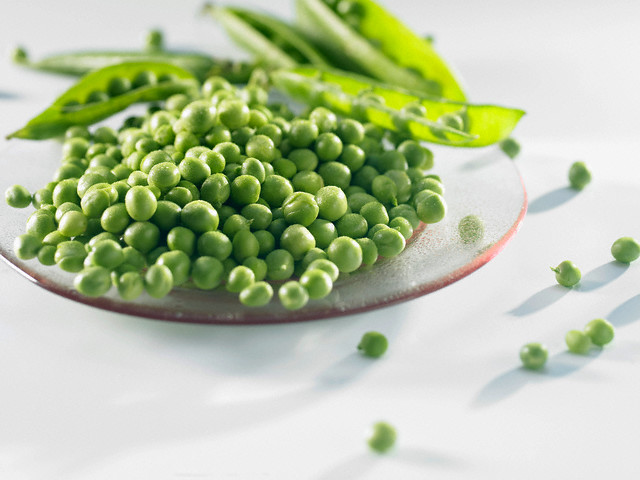
The value of peas as a food product is primarily due to its high protein content. It is due to this dietary property that peas are called "vegetable meat". 100 grams of pea seeds contain approximately 23 grams of protein (for comparison: 100 grams of beef contains about 19 grams of protein, and in the same mass of pork - 15 grams of protein). A highly trained person urgently needs a sufficient amount of dietary protein food in the diet, since this is one of the prerequisites for ensuring high performance and rapid recovery of muscle tissue after physical exertion. In addition, peas are an important component of nutrition for athletes also because it contains a sufficient amount of carbohydrates (about 57 grams per 100 grams of product). These substances have a very important property for us - when they are split in the body they release the energy used by the cells of our body to maintain a variety of functions, including the provision of motor activity. The content of fats in pea seeds is low - about 1.5 grams per 100 grams of product.
Due to such peculiarities of the chemical composition, peas have optimal dietary properties for inclusion in the diet of training people, because it provides regenerating muscles with proteins, supplies energy to the body through the cleavage of carbohydrates and at the same time contains very little fat, which prevents the formation of excess body weight. However, it should also be remembered that pea proteins, by their amino acid composition, are slightly inferior in dietary properties to proteins of animal origin. The fact is that proteins of plant origin do not have in their composition or contain in a very small amount some essential amino acids, which are extremely important for the normal functioning of many organs and systems of the organs of the human body. Therefore, despite the fact that peas are an important dietary product with a high protein content and even has the second name of "vegetable meat", it still can not serve as a complete replacement of protein products of animal origin.
Peas are also characterized by certain medicinal properties. For example, in folk medicine it is used as a strong diuretic for kidney and liver diseases. With various heart diseases, peas are also recommended for inclusion in the daily diet. The proteins contained in the seeds of peas have lipotropic properties, i.e. they are able to prevent the process of obesity. Eating peas is also advised for chronic gastritis and peptic ulcer disease, atherosclerosis, diabetes mellitus.
Currently, varieties of vegetable peas are divided into two large groups, slightly different in their dietary properties. Lushchilny peas (still called brain) has large and sweet taste seeds. These varieties were bred at the end of the 16th century, and now they are widely distributed around the globe and are well known to us on the banks of canned green peas available on the shelves of grocery stores. The second group of varieties is the so-called sugar pea, which does not contain a rigid parchment layer in its pods. Due to this property, the pods of sugar peas can be eaten whole - both seeds and leaves.
Pea seeds contain many vitamins necessary for human health - В 1 , В 2 , РР, С, carotene. Rich in peas and mineral substances - potassium, phosphorus, iron, magnesium, calcium.
Thus, due to its dietary properties, peas occupy a worthy place in the system of rational nutrition for people of all ages. However, it should also be borne in mind that when eating peas, some people have bloating - flatulence. Limit the use of peas is recommended for diseases such as gout and uric acid diathesis. This is because the seeds of this plant contain purines - substances from which uric acid is formed in the body. It can be deposited in the cartilaginous tissue and in the joints in the form of salts. This property of peas, however, should not be the basis for completely excluding it from the diet of sick people, but it will still be necessary to reduce the amount of peas in the dishes consumed in the presence of these diseases.