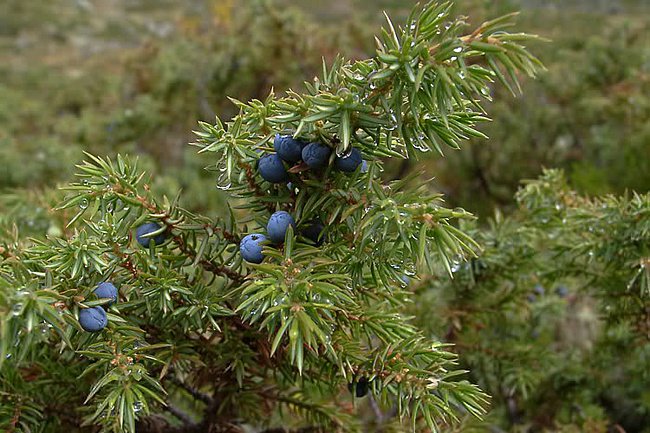
Description.
Juniper is a coniferous, as a rule, a low tree, or a shrub of the cypress family. In height, it usually reaches from 1 to 3 meters, the leaves are long-pointed, linear, covered with a waxy membrane, the bark is scaly, brown. The juniper blooms in May. Single fruits, pine cones of black color, ripen only in the autumn of next year.
Juniper is common in the European part of Russia, in Siberia, in the Caucasus, in the Urals. The plant grows in coniferous forests, along the edge of the forest and mountains. Forms thickets along the edges of the forest.
For the preparation of medicinal products from juniper fruits (shishko-berries) are used, which mature late in the autumn. Under the juniper bush put canvases, they shake fruit on them and sort them. After sorting, the fruits are dried in fresh air, or in a special oven at a temperature of no more than 40 degrees Celsius, stirring constantly. Drying in other conditions is not recommended, as the medicinal qualities of the mangrove are lost. With proper drying, the medicinal fruits are stored for 3 years.
Composition.
The juniper fruit contains a large amount of organic acids (malic, acetic, ascorbic), mineral salts, resins, waxes, sugary substances, colorants, essential oils (up to 2%). Essential oils are contained in the bark of the juniper, and in the leaves there is a lot of vitamin C and phytoncide (a biologically active substance with an antimicrobial effect).
Medical properties.
Due to the content of essential oils, juniper has a good diuretic effect. Essential oils enhance the filtration properties and limit the absorption of certain salts, which contributes to better cleansing of the kidneys. But with some kidney diseases, juniper can be a powerful irritant for kidney tissue.
Preparations made from juniper have an antimicrobial effect and promote the excretion of bile from the biliary tract, increase the secretion of gastric juice.
Also, essential oil helps to dissolve sputum and easily remove it from the lungs.
Application in medicine.
In medicine, juniper is prescribed for edema of cardiovascular and renal origin. Also, juniper is used as an antimicrobial agent for inflammatory processes in the kidneys and urinary tracts, for excretion of sputum from the bronchi, for its liquefaction and expectoration. Often, doctors prescribe juniper as a means to stimulate appetite, with diseases of the gastrointestinal tract, to improve the motor activity of the intestine and digestion.
Also, juniper is prescribed for diseases of biliary tract and liver, as it promotes the formation of bile and excretion into the intestine (favorable for bile formation and stagnation of bile).
Juniper is prescribed for the decline of strength, decreased immunity and anemia. It can also be used as compresses and baths for inflammation of the joints.
Contraindications.
Acute inflammatory and especially infectious allergic diseases of the kidneys (glomerulonephritis) - the fruits of the plant irritate the tissue of the kidneys, and this can worsen the patient's condition.
Recipes for preparation of medicines from juniper.
- Infusion for internal use:
Spoon a tablespoon of juniper fruit in enamel ware and pour a glass of hot water. After this, on a steam bath bring to a boil and boil for 15 minutes. Cool and dilute with water to the original volume. Take this infusion should be 3 times a day for 1 tablespoon after eating. Infusion can be stored in the refrigerator, but no more than three days.
- Chewing fruit:
With the decline of strength in the spring period, the use of juniper fruit is recommended. Start consuming fruits from 4 pieces per day and bring up to 15, increasing the amount by one per day. Further, the use of fruit is gradually reduced to the original amount.
Juniper is a wonderful healing plant. But remember, the medicinal properties of juniper can also have a negative effect on the body. Therefore, before starting treatment, a doctor's consultation is necessary.