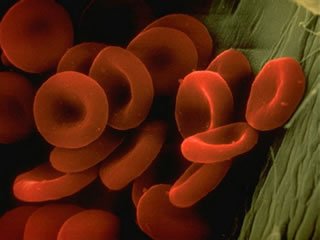
• Erythrocytes - red cells without a nucleus - the most numerous cells of blood. They are disk-shaped and contain a protein called hemoglobin.
• White blood cells - white cells - are part of the immune system. Their main task is to protect the body from infections.
• Platelets are the largest cells. They help the blood to clot when there are injuries and scratches. Blood can coagulate inside our body.
Then there are bruises, blood clots. If a thrombus arises inside the vein, it can disrupt the blood circulation, and hence the supply of oxygen. Strokes also are the consequences of blood clots. But in this case, thrombi clog the arteries that feed the brain. On the composition of blood, its health affects almost everything: the air we breathe, our food and the water we drink. The sea water and honey are the closest to the composition of blood. It is no accident that doctors recommend using them to fill the necessary elements in the body. Therefore it is very useful to swim in sea water and take baths with sea salt. Honey should be taken without dissolving it in hot water. At a high temperature, most of its useful elements are destroyed. Flower pollen and fruits are also indispensable helpers of blood.
What do we know about blood?
• In women, the blood volume is an average of 3.9 liters, while in men it is 5.2 liters.
• Blood circulates throughout the body, penetrates almost everywhere, using arteries, veins and capillaries for this purpose. It carries oxygen along the body, nutrients, hormones, enzymes and various substances on which our life and health depends. With the same success, blood carries carbon dioxide and waste products of metabolism (uric acid, surplus water, etc.).
• When more blood comes to an organ, it warms up, and vice versa. Blood transfers heat, and the temperature equilibrium in the body depends on it. It is very important that blood helps us protect the body from germs, maintain immunity. Our body is protected from blood loss, because blood can clot when the integrity of the organs is compromised.
Diagnosis by drop of blood
Each of us at least once in my life gave blood for analysis. To decipher the paper issued in the laboratory with the results, it is necessary to understand what parameters are indicated there and what they mean. The first line of clinical analysis is usually the number of red blood cells. In a healthy person, they should be 4.5-5 million / l (in men) and 3.5-4.5 million / l (in women). If the analysis showed a smaller amount, then pay attention to hemoglobin. Reduced amounts of red blood cells can be associated with anemia. An increased number of leukocytes indicates a bacterial infection. If the white blood cells fall, then the body gets the virus. To clarify the diagnosis, it is necessary to look at the number of cells taken separately in the leukocytes. For example:
• An increased number of eosinophils that make up the leukocytes, speaks of allergies. The norm of these cells is 5 percent. But it also happens that the analysis shows an excess of the norm, and there are no obvious signs of allergy. In this case, it is necessary to check with an allergist and take tests for worms;
• an increase in neutrophils, which are also a type of leukocyte, indicates a purulent inflammation, and the so-called "young neutrophils" can indicate a serious disease - leukemia.
Clotting is associated with platelets. If their number decreases, then secondary anemia and even cancers are possible. But a low level of platelets is also possible in pregnancy. At a critical level of 50 thousand / l, a person can die from bleeding. With elevated platelets, your doctor can check for leukemia, diphtheria, or malaria. An important parameter of the blood test is the rate of erythrocyte sedimentation (ESR). If the children in this figure is normally 2.5 mm per hour, then in adults - 8 mm. Increases ESR in inflammation, such as lungs or kidneys. The level of sugar in the blood shows the effectiveness of the body's absorption of glucose. If in the morning on an empty stomach sugar is more than 6.1, then a person has a tendency to diabetes. And at a rate of 7.1 doctors usually already put the given diagnosis.
If the blood is thick
Increased coagulability of the blood - the cause of the appearance of varicose veins, thrombophlebitis, heart attack and stroke. Often such a problem is initially associated with a lack of water in the body. Start drinking enough clean water, and the viscosity of the blood will return to normal. Eat juicy vegetables and fruits, drink mineral water and juices, but reduce the amount of black tea, coffee and alcohol that dehydrate the cells. Cherries and tomatoes contribute to reducing blood coagulability. It is useful to drink celery and garlic juices. The blood of cranberry fruit and grape juice is liquefied. Watch for the content of iodine in foods, as it reduces the viscosity of blood, increases the tone of blood vessels, reduces blood pressure. Eat fish, sea cabbage, feijoa. But remember that the overabundance of iodine is also harmful. Still it is possible to take tincture from a peel of fruits of a horse chestnut. Take a glass of peel and pour 0.5 liters of vodka. Insist in a dark place for 2 weeks, strain. Keep the tincture in the refrigerator. Take an empty stomach on 25 drops, mixing with 1/4 cup water, 2 times a day (morning and evening). After that you can eat no earlier than 30 minutes. The course of treatment is 3 weeks. Then take a break for a week and repeat the course of treatment. If you are prone to excessive blood clotting, do not use in the treatment of nettle. The viscosity of the blood also increases from parsley, sage.
Healing products
With any anemia, first of all, it is important to understand its causes and eliminate them. Otherwise, the treatment will not work.
• If it is only a matter of poor nutrition, then in the diet it is necessary, first of all, to increase the number of products that contribute to blood formation. It is buckwheat, containing a lot of iron, beet, liver and animal meat. But do not abuse the liver, especially during pregnancy. It filters all harmful substances, taking them from the blood. Therefore, eat it better in moderation.
• It is recommended to eat more cream, milk and eggs.
Only use dairy products separately from others, otherwise they will not be able to properly digest. In addition, you need to know that it is better to drink milk in small sips, on the sly, so that the nutrients from it are well absorbed in the gastrointestinal tract and there were no constipation.
• Corn, millet, turnip, as well as nuts, seeds and berries are useful, especially blueberries, strawberries and raspberries.
• Anemia can help grapes, bananas, as well as record holders for the content of vitamin C - garlic and onions (especially green). Dill and green pepper are useful.
• Eat dark honey, grated carrot and sour cream. Use vegetable juices: mix the juice of beets, carrots and radishes and take this product for 1 tbsp. l. 3 times a day before meals 3 months in a row.
• Any multivitamin tea, including black currant, mountain ash, a rose hip drink, is good. Try, for example, such a recipe. Pour 2 cups of boiling water 2 tsp. berries of red mountain ash, let it brew for 1 hour, add sugar to taste and drink for 3-4 meals throughout the day.
Where does anemia come from?
Anemia is the lack of hemoglobin in the blood. And the causes can be metabolic disorders, worms, poor digestion of food and simply inadequate nutrition. In children of the first 5 years of life, the doctor diagnoses anemia with a hemoglobin level in the blood below 110 g / l. In children older than 5 years and adults - at a level below 120 g / l. It is interesting that psychologists noticed that people who experience fear of life most often suffer from anemia. They think that they are not good enough for this world. If you, too, suffer from anemia, then repeat the words daily: "I love life. I enjoy life. Living and enjoying life is safe. I am happy that I live in this world. " Lack of iron is the most common cause of anemia. The organs begin to receive less oxygen, since iron helps to carry it through the body. As a result, immunity decreases, the risk of infectious diseases increases, fatigue and apathy appear. And children may even delay growth and mental development. In organs that lack oxygen and iron, over time changes begin to occur, leading to a deterioration in their work and health in general. The reasons for reducing hemoglobin in the blood may be a lack of such an important vitamin, as B12. Most often this kind of anemia occurs because of problems with the mucous membrane of the stomach and intestines. In such cases, this vitamin is poorly absorbed into the blood.
How did blood groups appear?
Everyone has heard that the blood has a group and a Rh factor. These characteristics depend on the composition of proteins located on blood cells. The blood group in a person does not change over a lifetime. Scientists say that once people had only the first blood group, but now they know four. How did they come about? There are several scientific theories, and here is one explanation. This happened gradually, as the person added to the diet of new product groups. People with the first blood group were fed at the expense of hunting, so the basis of their diet were animal proteins. Over time, the ancients began to eat and plant products, so that a second blood group appeared. So the body has adapted to a new kind of nutrition.
The third group of blood arose when the diet was replenished with dairy products. There is an opinion that the fourth blood group exists only 1000 years. Scientists do not quite understand what it is connected with.
What is your character?
As early as the beginning of the 20th century the Japanese Furuqawa Takeshi suggested that there is a connection between the blood group and the individuality of a person.
The first
It is believed that people with this ancient blood group must support themselves with meat products in order to remain strong and enduring. As a garnish they will be suitable vegetables. With starchy foods, it is better not to mix proteins. Cereals and legumes can generally be reduced to a minimum, like potatoes and eggplants. From meat products it is recommended to eat more beef, which can be replaced with chicken or fish. Such people often have gastrointestinal diseases.
The second
It is better to stick to a vegetable diet, and to minimize not only meat, but also milk. However, sour-milk products in a moderate amount are useful. On the table should be soy, beans and grains. Potatoes, cabbage and corn are better eat less, like eggs, and chicken. Those who have the blood of the second group can suffer rheumatic diseases, diabetes, coronary heart disease, bronchial asthma, allergies, leukemias more often than others.
The third
Milk in any form is very useful for representatives of this group. Meat game, as well as meat products made from herd animals (for example, lamb), are also suitable for food. Vegetables, fruits and eggs are digested quite normally. You can combine different foods, but, most importantly, the diet should be balanced. To vegetable food is good to add a little meat and dairy products (especially kefir or yogurt). Not very useful chicken, as well as red fruits and vegetables (tomatoes, pomegranates, persimmons and others). People with a third blood group are more prone to pneumonia, and after surgery, to various infections and sepsis. They have a tendency to radiculitis, osteochondrosis and joint diseases.
Fourth
People with this blood group need to pay attention to strengthening immunity. They most often catch cold, they risk catching the flu and other infections. It is very important that the diet contains a lot of vegetables and fruits rich in vitamins.
Clean the blood
In some countries in Europe and in Japan, many doctors prescribe to people over 50 years old to drink for the prevention of blood-cleansing fees for 2-3 weeks per year. They help to maintain normal immunity and metabolism, clearing the body of viruses and bacteria.
I want to be a donor!
Being a donor is very honorable. But that from donation was only a benefit, it is necessary to understand when and how it is allowed to donate blood, how often it can be done. After all, there are absolute and relative contraindications to the surrender of blood.
• It is strictly forbidden to donate blood for AIDS and viral hepatitis, alcoholism and bronchial asthma.
• Must pass at least a month after the flu or ARVI, before you can go to the blood collection point.
• After tooth extraction, you can become a donor only after 10 days, and after other operations - after 6 months. A full list of contraindications and limitations is given by the doctor on a preliminary examination, which usually takes place before a person becomes a donor. For 2 days before the delivery of blood, you will have to exclude from the diet all fatty, fried, smoked and spicy, as well as eggs and milk. Also, any medicines and alcoholic beverages are forbidden, but you have to drink more water. At the transfusion station, leave in the morning on an empty stomach and necessarily get a good night's sleep. Then you will more easily transfer the procedure. If you donate whole blood, it will take no more than 10 minutes. But for the delivery of platelets spend up to 2 hours. When you give blood plasma doctors will hold you for 40 minutes. After donating blood, do not rush to run immediately on business. Better sit and listen to your feelings. Do not forget to take a certificate of donation so that you can work out additional days off at work, and also get a coupon for food. More rest, get enough sleep, walk, eat well. Do not forget about fresh vegetables and fruits, drink plenty of water and tea. Remember that until the next delivery of blood should be 2 months, and after 4-5 times take a break for 3 months. If you donated individual blood components, then the next visit of the item can be no earlier than 2 months, but you should orient the doctor. By the way, in the periods between blood donations, you can use the means to increase hemoglobin and hemopoiesis. These can be herbs and juices, which are used for anemia.
If you get sick
With any disease in the blood, the number of viruses increases. Fighting the disease, immune cells and drugs kill them. By killing, viruses throw toxins into the blood, which increase the load on the diseased organism. In such cases propolis will have an active cleansing effect. Take a small piece of propolis, chew it as long as possible and swallow it. Do this 3-4 times a day for 1 -1.5 hours before meals. Often with colds, inflammatory diseases it is recommended to drink cranberry juice or mors. Cranberries are also useful for preventing blood contamination. Drink cranberry juice with honey (to taste) 1-2 times a year for 3 weeks. In the first week, drink 0.5 cup 3 times a day, the second - 2 times a day, and the third - 1 time per day. Do not use this remedy if you have high acidity or you have a serious gastrointestinal disease, for example a stomach ulcer or duodenal ulcer.