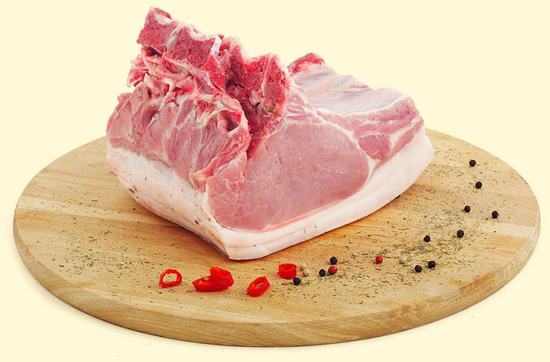
Pork meat is "forbidden" in the food culture of many peoples. Perhaps in this connection (after all, bans are never given for nothing!), It is often possible to see the question on mother forums when children can be given pork.
Intense complementary feeding, in addition to breast milk, begins in infants from the seventh month after birth. Already in the eighth month, nutritionists not only allow, but also recommend the introduction of meat products into the baby's diet, usually meat, ground in the form of puree and necessarily together with the already pureed vegetable puree.
Meat is a valuable source of animal protein and minerals (potassium, iron, phosphorus). Many parents prefer to start feeding the baby with the most "dietary" and tender turkey meat. In any case, every "grade" of meat should be sampled separately, starting with ½ teaspoon of meat puree. After all, meat, like any new product for a child, can cause allergic reactions. Over time, the baby's diet can enrich low-fat veal or beef, pork (also not fat, but lean). A decent variety of meat menu can provide rabbit or chicken meat, as well as language. Features and traditions of individual regions allow adding to the diet such meat ingredients as horse meat and venison.
Some parents are wary of introducing pork into the baby's diet, preferring beef or chicken meat. However, it should be remembered that veal and chicken, when included in the children's menu, also require caution. A child who showed obvious intolerance to cow's milk, it is better not to give veal. Poultry meat, in some cases, also provokes an allergic reaction in children. In such cases, the child's meat ration is recommended to include pork from the age of eight months.
There is an opinion that pork itself contains many histamines, which can cause an allergic reaction in young children. This statement is true, perhaps, only in relation to fatty meat. If the parents have a suspicion of allergies, the introduction of pork meat into the baby's menu can be postponed for a short time. Tender pig meat in small volumes can be given little from the age of 10 months.
In any case, it is not necessary to completely abandon the meat, because unreasonable vegetarianism in baby food entails disruptions in the development of the whole organism of the child. In the most serious cases, the consequence of the refusal of meat food is the underdevelopment of the brain with the danger of progressive dementia. It is not entirely justified, in this connection, that the child can get absolutely everything necessary for growth and development from cereals, nuts, soybeans, seeds and vegetables, and meat should be neglected, since it is only more affordable and cheaper substitute.
By the age of eight months, the baby's gastro-nutritive tract is already ready to cope with the digestion of meat, this is facilitated by a preparatory one and a half month period of complementary feeding with other dishes new to the baby.
Children with a reduced level of hemoglobin or signs of rickets need to enter meat before the due date. Due to special medical indications, meat is recommended to be introduced into lure from 6 months. Breastfeeding, transferred to artificial feeding, also make up for the lack of nutrients if their diet gradually introduces meat.
Thus, starting from the age of 8 months (and with special indications it is possible earlier), and before the child reaches the age of 2-3 years pork meat, in all its varieties, and certainly in reasonable quantities, can be introduced in the diet of your child.